
The Performance Pyramid
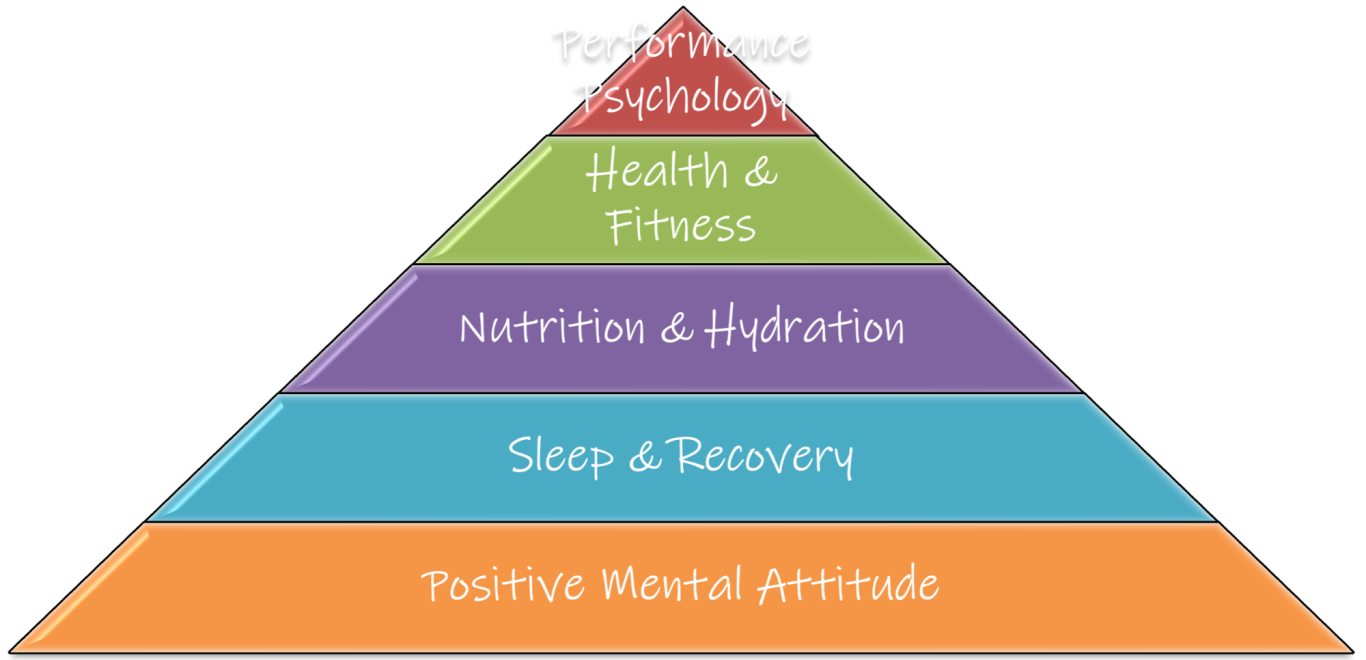
The Performance Pyramid
Just as pyramids rest on a solid base, your mindset forms the foundation for success. A weak mindset cannot support life’s complexities, but adopting a Positive Mental Attitude (PMA) empowers you to embrace challenges, adapt with ease, and foster growth while helping others.
Sleep and Recovery
After PMA, sleep is the most powerful performance enhancer. Dr Andrew Huberman calls it the best tool for stress relief, immunity, and emotional stability. Matthew Walker warns that chronic sleep deprivation can be fatal. Poor sleep harms mental and physical health, impairs decision-making, and drains energy. Recovery restores balance (homeostasis) through physical and mental techniques, such as refuelling, stretching, or calming the nervous system.
Nutrition and Hydration
“You are what you eat” is true—our cells regenerate from the fuel we consume. Wholesome foods optimise cellular function and reduce disease risk. Diet influences genomic expression, affecting conditions like cancer. While we cannot control all external factors, good nutrition mitigates their impact and supports longevity and health-span.
Health and Fitness
Health links directly to performance. A healthy body sustains a healthy mind, enabling you to meet work demands and still engage meaningfully with loved ones. Fitness isn’t about extremes; it’s about having the stamina and mental readiness for daily life. Mental health matters too—one in four people face challenges annually.
Performance Psychology
The pyramid’s peak is optimal cognitive functioning under pressure—whether managing family routines, sitting exams, competing in sport, or excelling at work.
How to Use It
Focus on one layer at a time, building gradually without neglecting previous steps. Start with PMA, then integrate sleep and recovery, followed by nutrition, fitness, and finally performance psychology. Skills move from conscious effort to automatic habits through consistent practice.